EYE CONDITIONS
Glaucoma
What is glaucoma?
Glaucoma is the name given to a group of eye conditions that damage the optic nerve, the nerve that carries visual information from the eye to the brain, playing a vital role in sight. In glaucoma, damage occurs at the point where visual signals leave the eye and travel to the brain, so when the optic nerve is affected, the brain can no longer receive all of the visual information it needs, leading to gradual loss of vision.
There are several different types of glaucoma:
- Chronic (open‑angle) glaucoma – the most common form
- Acute (angle‑closure) glaucoma
- Congenital glaucoma (present from birth)
- Secondary glaucoma, caused by another eye condition, injury, or medication
Chronic glaucoma usually develops without any noticeable symptoms. There is no pain, and central vision often remains clear in the early stages. The condition typically affects peripheral vision first, so changes can go unnoticed for a long time. By the time symptoms are detected, significant and irreversible vision loss may already have occurred.
Common features of glaucoma include:
Raised pressure Inside the eye
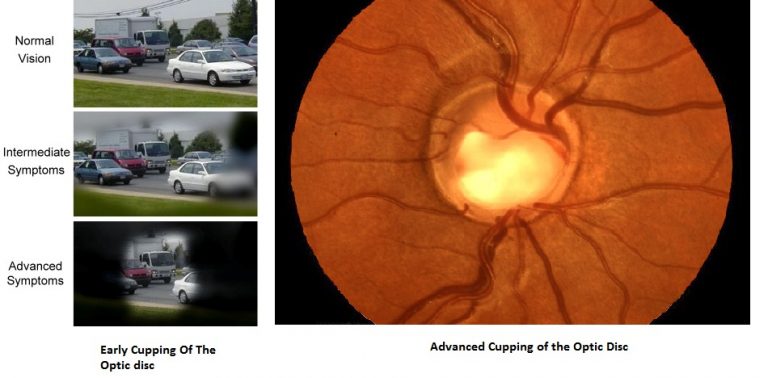
Changes to the optic nerve(often described as ''cupping'')
Gradual loss of peripheral(side) vision
Eye Pressure and Glaucoma
The eye is filled with a clear fluid called aqueous humour, which is continuously produced to nourish the eye and help it keep its shape(You can think of this like a tap that is always gently running). This fluid normally drains away through tiny channels at the front of the eye, where the cornea meets the iris (the coloured part of the eye). Eye pressure can rise when:
- Too much fluid is produced
- The drainage system does not work efficiently
- A combination of both
When fluid cannot drain properly and pressure builds up, it puts stress on the optic nerve, which can lead to damage over time. In sudden cases, like acute glaucoma, this pressure can reduce blood flow to the optic nerve, causing rapid vision loss. In most slow‑progressing forms of glaucoma, however, the precise way raised eye pressure harms the optic nerve is not yet fully understood.
How can it be detected and treated?
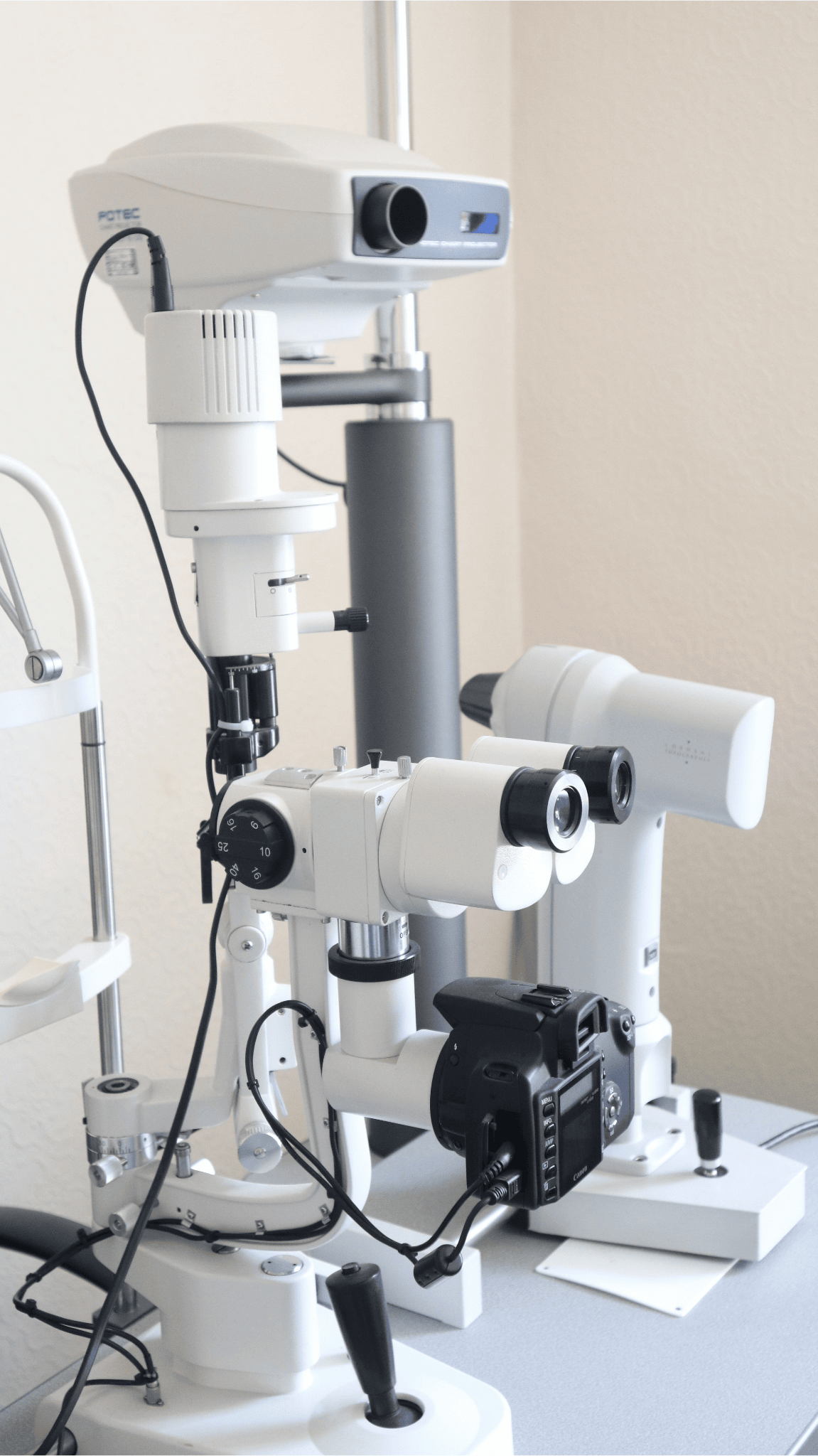
Glaucoma can be detected through a series of simple, painless tests carried out during a comprehensive eye examination, including, measuring eye pressure, assessing peripheral vision (visual field testing) and examining the optic nerve.
When detected, although the condition cannot be cured, it can usually be successfully managed. Most people are treated with daily eye drops to lower eye pressure and slow progression, with some cases be viable for laser treatment or surgery (such as a trabeculectomy). These treatments are highly effective in protecting remaining vision.
Who Is at risk of developing Glaucoma?
Certain factors increase the risk of developing chronic glaucoma:
- Age: Rare under 40, affecting around 1% of people over 40 and around 5% over 65
- Family history: Having a parent or sibling with glaucoma increases risk
- Ethnicity: People of African or Caribbean heritage are at higher risk
- Short‑sightedness (myopia): Higher levels increase risk
Having one or more risk factors does not mean you will develop glaucoma, but it does mean regular eye examinations are especially important.
Book your eye examination HERE
Acute Glaucoma(Angle‑Closure Glaucoma)
Acute glaucoma occurs when the eye pressure rises very suddenly due to a blockage in the drainage system at the front of the eye. This is known as angle‑closure glaucoma and is a medical emergency.
Symptoms usually come on quickly and may include:
- Severe eye pain (often starting suddenly, sometimes during the night)
- Redness of the eye
- Blurred vision or seeing halos around lights
- Nausea and vomiting
If you experience these symptoms, seek urgent eye care immediately.
Acute glaucoma is treated urgently with medication to rapidly lower eye pressure, with further treatment including eye drops, laser procedures, or surgery, depending on the cause. Preventative laser treatment is often carried out on the other eye to reduce the risk of a similar attack occurring in the future.