

News
Why Attending Your Diabetic Eye Screening Matters
Diabetic Eye Disease Awareness Month If you live with diabetes, you probably already know the importance of monitoring blood sugar levels and keeping up with regular health checks. But there’s one appointment that can get overlooked, diabetic eye screening. Even if your vision feels absolutely normal, diabetic eye disease can develop silently. That’s why attending…
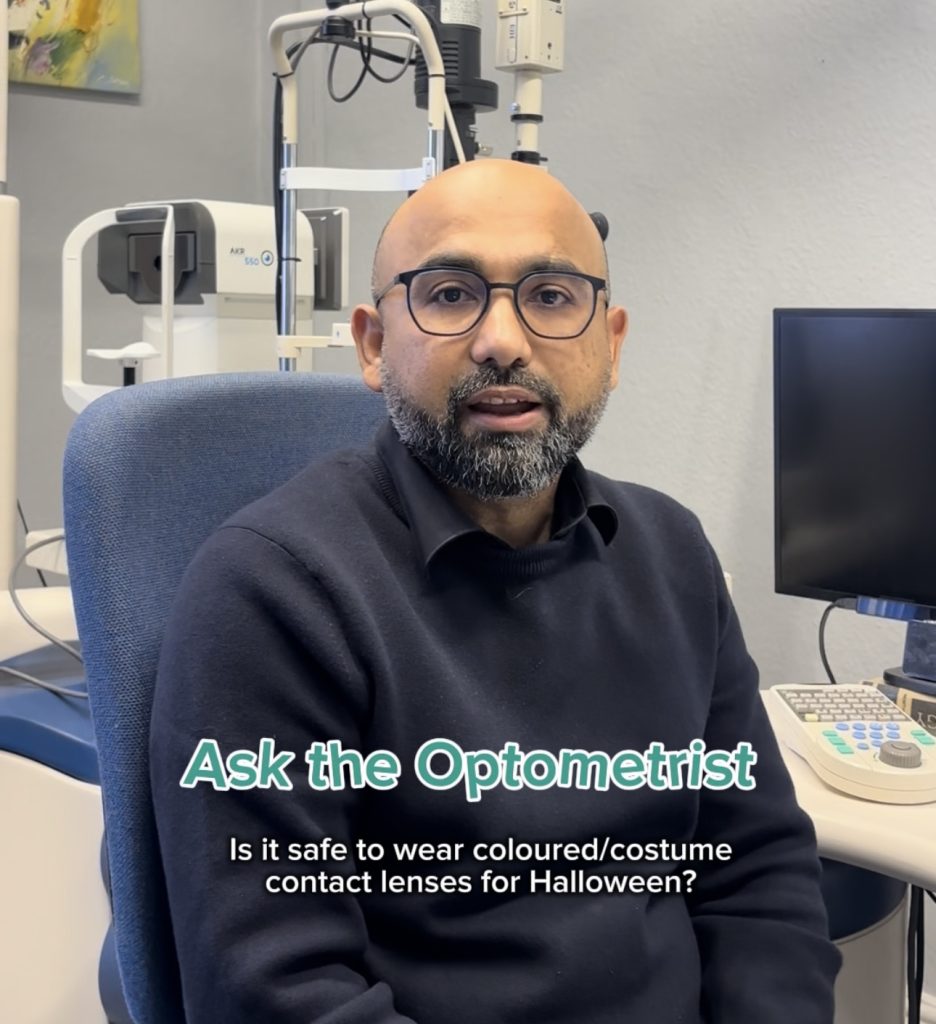
Is it safe to wear coloured/costume contact lenses?
Our optometrist Maz explains why non-regulated contact lenses can be more trick than treat⚠️🤕 It is really important to only get contact lenses from a regulated provider, and ideally, wear them only when recommended by your optician to correct your vision. We would always suggest that it is much safer to skip costume contacts altogether…
Keratoconus
Keratoconus is the most common dystrophy of the cornea, affecting around one person in a thousand, although some reports indicate prevalence as high as 1 in 500 individuals. It is typically diagnosed in the mid to late teens and attains its most severe state in the twenties and thirties. Keratoconus in detail Keratoconus is…
Blepharitis
How is Blepharitis diagnosed? Blepharitis refers to inflammation of the eyelid margins. There are two broad categories of the condition – Anterior Blepharitis and Posterior Blepharitis. Anterior Blepharitis affects the front part of the eyelid margin, near the roots of the eyelashes. It is commonly caused by bacteria that normally live on our skin, that…
Dry Eye Syndrome
Introduction Dry eyes occur when the eyes either don’t make enough tears, or the quality of the tears produced is reduced, which means the tears can evaporate rapidly from the surface of the eye, allowing the eye to dry. Often, the reduced tear quality is a result of blockage or inflammation of the oil…
Floaters and Flashing Lights
Floaters are extremely common, and are sometimes associated with flashing lights in the eye, especially when they first appear. When they first appear, they normally affect one eye, but may affect both eyes at the same time. In fact, they’re so common, that approximately two thirds of the population will have floaters by the…
Retinal Detachments
There are three types of retinal detachments. The most common form is where a break in the retina’s sensory layer causing fluid to seep underneath. This eventually causes a separation in the layers of the retina. Individuals who are particularly short sighted, with historic eye injuries or who have undergone eye surgery are most susceptible…
Nystagmus
What is Nystagmus? Nystagmus is a classified eye disease where the patient experiences an involuntary movement of the eyes in which they oscillate from side to side, up and down or even in a circular motion. People who have Nystagmus are usually either blind or have very poor vision. Their vision can be considered a…
Retinitis Pigmentosa
Retinitis Pigmentosa is a hereditary disease where a specific gene defect causes the cells in the Retina of the eye to misfire. There isn’t a defined cure or treatment, however, many find the onset to be quite slow. The symptoms begin with central vision losses, but there are cases where the outside of vision can deteriorate slowly creating a tunnel…
Diabetes
Approximately 3% of the population is affected by diabetes. Increases in the blood glucose concentration (hyperglycaemia) occur when there is a lack of naturally produced insulin in the body. There are two main types of diabetes, Type 1 (Insulin Dependent) which affects those with damage to certain cells in their pancreas and usually occurs for…
- « Previous
- 1
- 2
- 3
- 4
- Next »